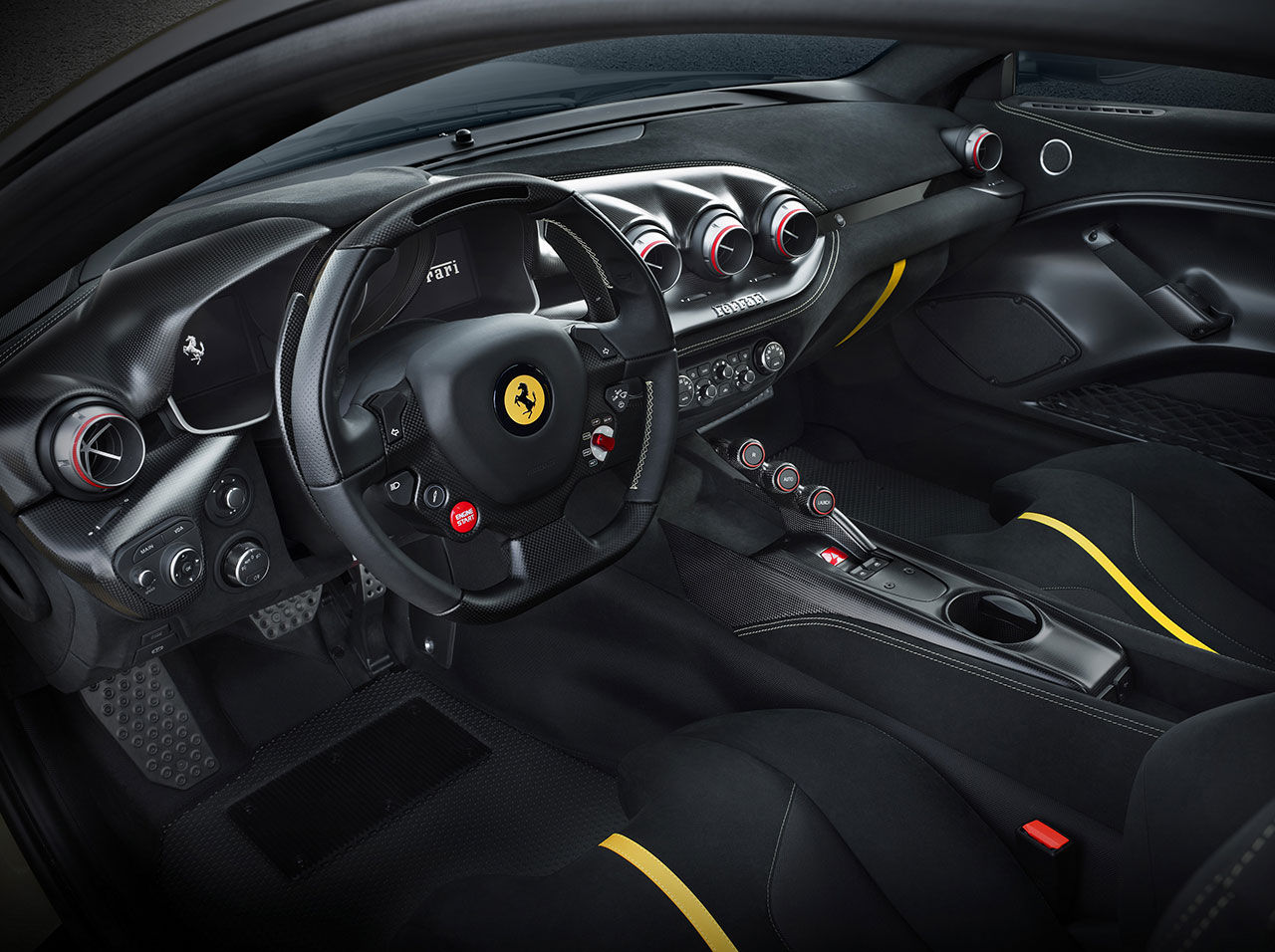
Ferrari presenterar F12tdf
Ännu mer redo för racerbanan
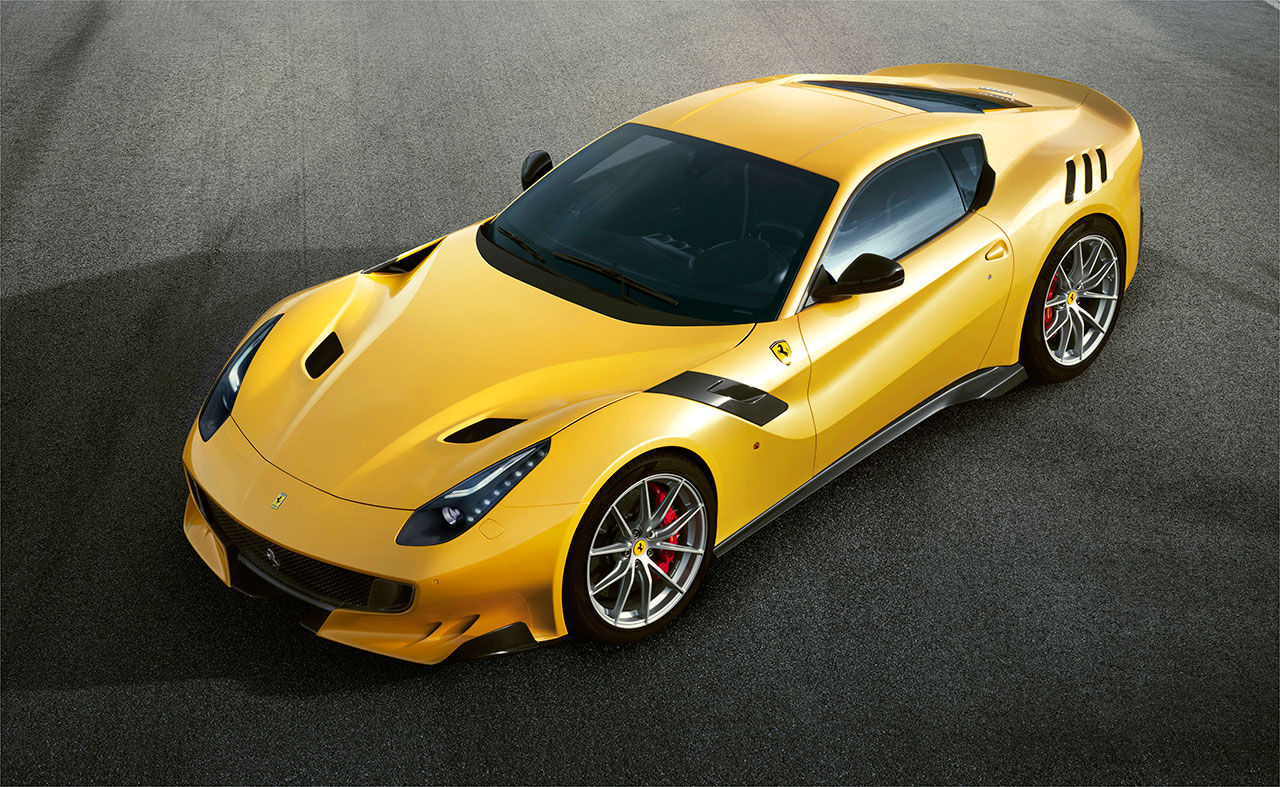
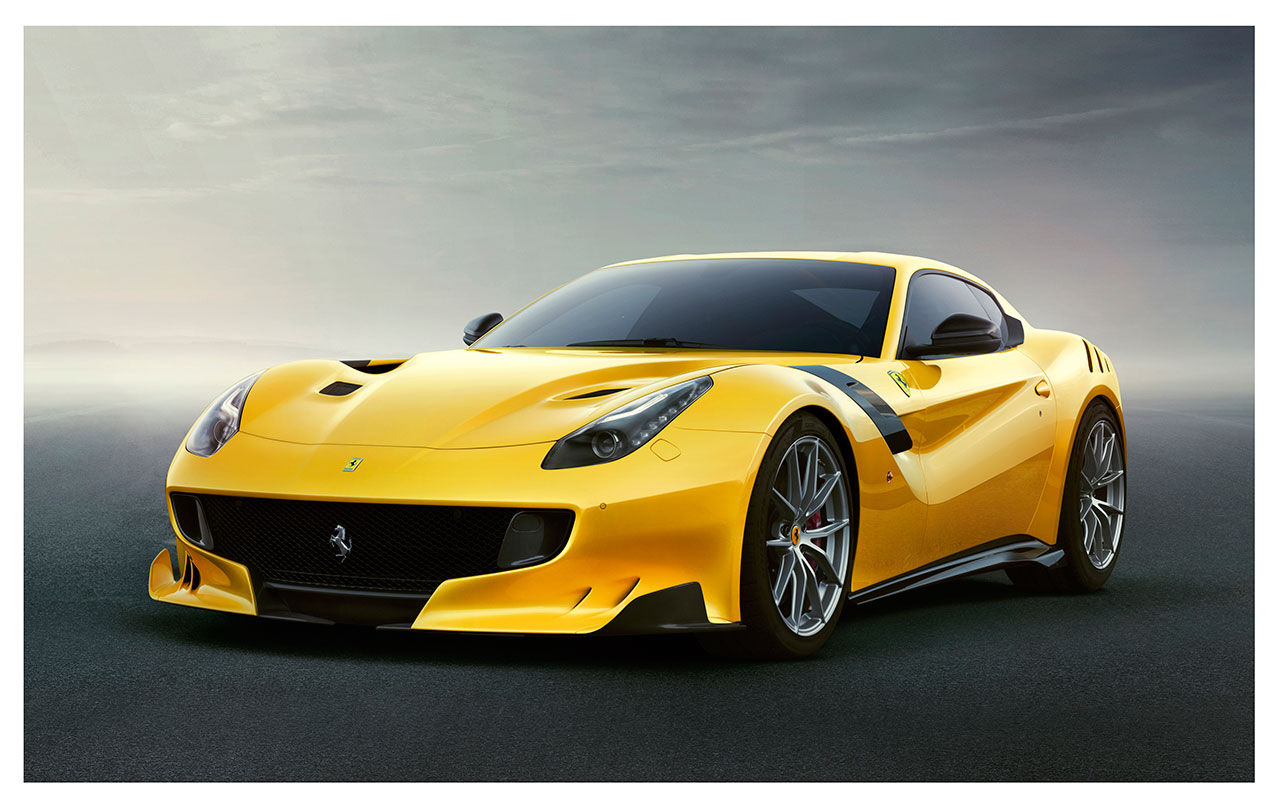
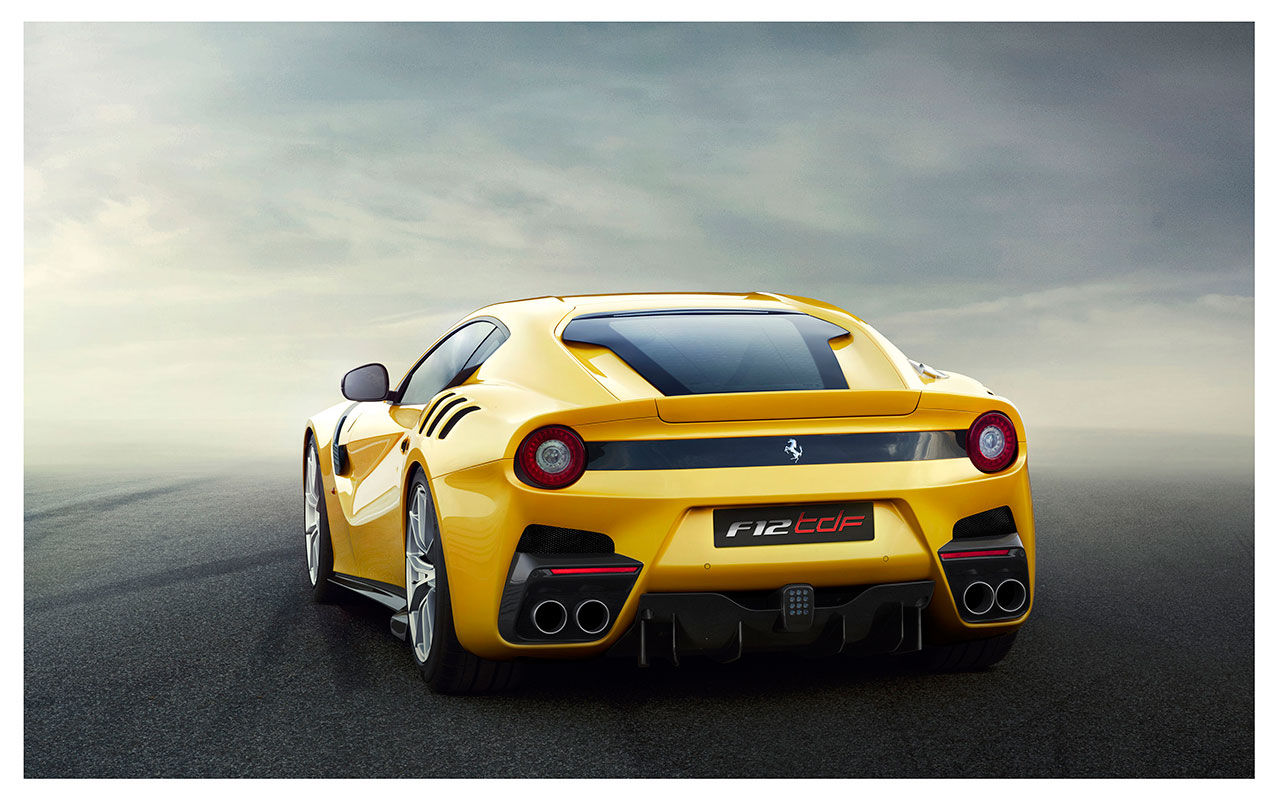
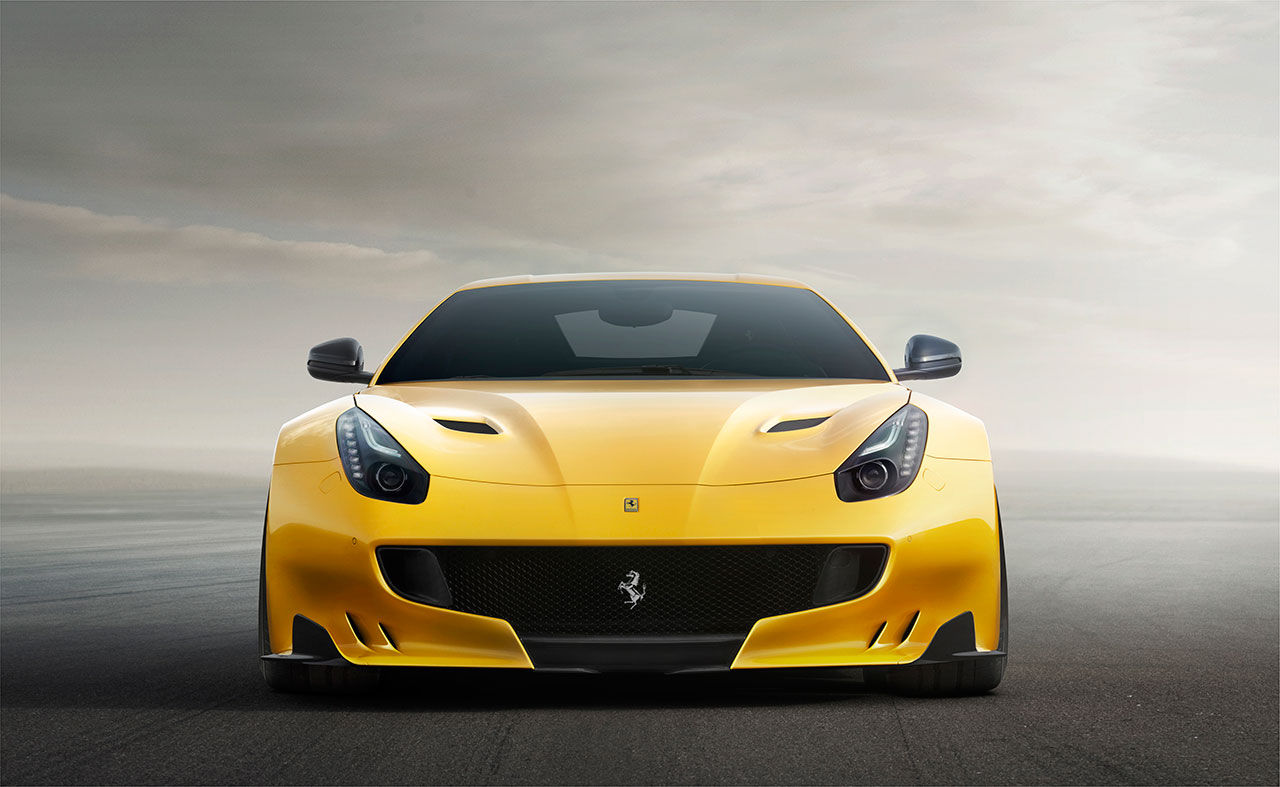
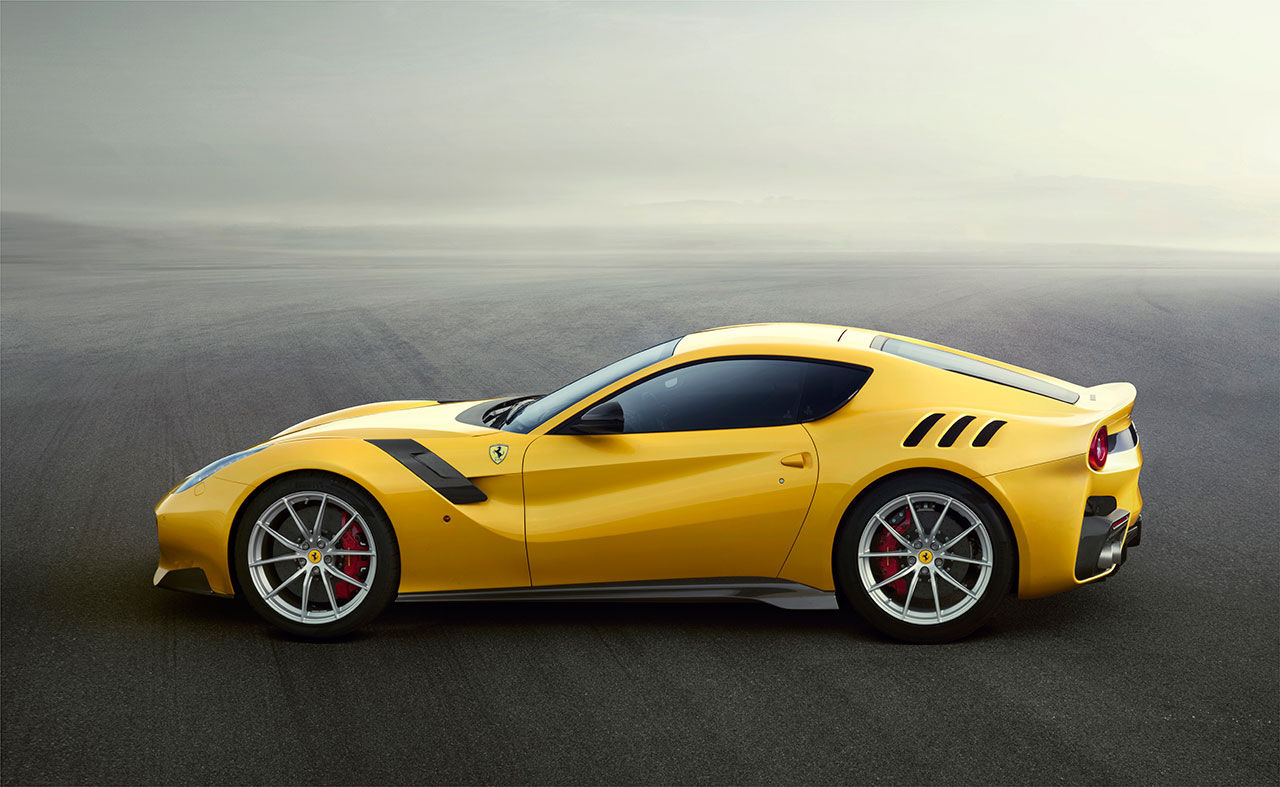
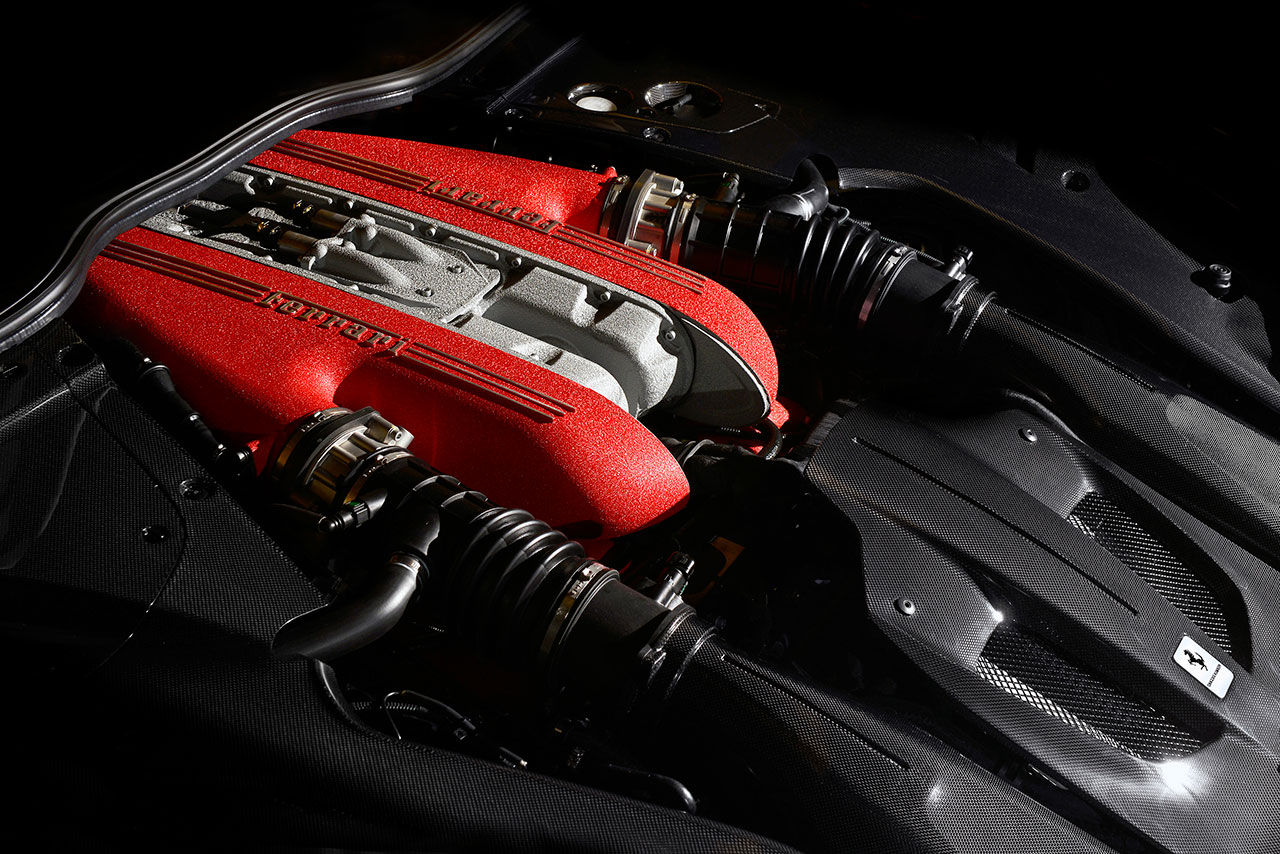
Spionfotografer har under en ganska lång tid sett mystiska versioner av Ferrari F12 smyga omkring och det har sedan dess snackats om att en Speciale-version därför skulle vara runt hörnet. Nu presenteras den, men den heter inte F12 Speciale utan F12tdf där tdf är en förkortning av Tour de France. Cykeltävlingen kanske ni tänker? Nej, detta är en hyllning till långloppsracingen Ferrari dominerade i på 50- och 60-talet. Den 9 november äger den officiella avtäckningen rum men bilder och fakta kring bilen får vi ta del av redan i dag.Bilen byggs i en begränsad upplaga om 799 stycken exemplar och det köparna får är en F12 som är ännu mer anpassad för att köras på banan. Effekten ur den 6.2 liter stora V12:an har skruvats upp från 740 till 780 hästar och vridet har ökats med 15 Nm till 705. 0-100 km/h ska gå på snabba 2.9 sekunder, 0-200 på bara 7.9 sekunder medan toppfarten anges till över 340 km/h. På Ferraris egna testbana, Fiorano, klockar bilen in på 1:21. Tjänstevikten anges till 1 520 kilo vilket innebär att ingenjörerna har lyckats trolla bort 110 kilo jämfört med en vanlig F12. Bromsoken hämtas från LaFerrari vilket gör att den nya stoppsträckan från 100 km/h blir 30.5 meter, från 200 km/h 121 meter. Nytt är även bakhjulsstyrning, som gör bilen ännu bättre på att ta kurvor.Utseendemässigt skiljer sig bilen genom ett helt nytt kjolpaket, ett par nya luftintag och en överlag mycket mer aggressiv design. Den är bredare, lägre, argare och så mycket uppkäftigare än tidigare.Allt om bilen finns i pressmeddelandet och på länken nedan.
auto.ferrari.com
Bil,
Ferrari,
F12tdf,
special,
officiell,
unik,
racing,
racer
Pressmeddelande
F12tdf – NEW LIMITED EDITION SPECIAL SERIES DELIVERS
TRACK-LEVEL PERFORMANCE ON THE ROAD
OFFICIAL DEBUT ANNOUNCED FOR THE FINALI MONDIALI
AT MUGELLO ON NOVEMBER 8
Maranello, 13 October 2015 – Ferrari reveals the F12tdf which pays homage to the Tour
de France, the legendary endurance road race that Ferrari dominated in the 1950s and
‘60s, particularly with the 1956 250 GT Berlinetta which won four consecutive editions.
It was a race that rewarded cars that combined maximum performance with the
driveability and ease of use that enabled the competitors to race for hundreds of
kilometres a day over fast, tortuous roads and on circuits. The F12tdf is the ultimate
expression of the concept of an extreme road car that is equally at home on the track,
and just 799 will be built.
The F12tdf is a concentration of technical innovations which involve all those areas
central to Ferrari’s DNA: engine, aerodynamics and vehicle dynamics. As a result, in
terms of acceleration, roadholding and agility, the new berlinetta is second to none.
The F12tdf’s performance is assured by the 780 cv, naturally-aspirated V12 derived
directly from the F12berlinetta’s multi-award-winning engine. The car’s exhilarating
dynamic behaviour, specifically its lateral acceleration in corners, is due to an 8%
increase in the ratio of the front tyres compared to the rear ones. The car’s natural
tendency to oversteer as a result of the change in tyre sizes is compensated for by the
innovative rear-wheel steering system – known as the Virtual Short Wheelbase, which
is integrated with the other vehicle dynamic control systems – that guarantees the
steering wheel response times and turn-in of a competition car while increasing stability
at high speed. Cornering speeds are also higher thanks to the significant increase in
downforce - +87% - which has reached unprecedented levels for a front-engined V12
berlinetta.
A radical redesign of the bodywork, interior, engine, transmission and running gear,
along with the abundant use of carbon-fibre inside and out, has slashed 110 kg off the
car’s overall weight.
.
All of these factors combine to produce record performance figures: 0-100 km/h in 2.9
seconds and 0-200 km/h in 7.9 seconds in addition to a substantial boost in lateral
acceleration. The F12tdf laps Fiorano in just 1’21”.
Ferrari spa
Direzione e stabilimento
via Abetone Inf. 4
I-41053 Maranello (MO)
tel+39 0536 949 337
fax +39 0536 949 049
www.ferrari.com
Sede sociale
via Emilia est 1163
P.O. Box 589
I-41122 Modena
Capitale sociale
€ 20.260.000 i.v.
P.Iva – Cod. Fisc.
Nr. Reg. Imprese Modena:
00159560366
R.E.A. di Modena 88683
Direzione e Coordinamento:
Fiat Chrysler Automobiles N.V.
Outstanding stopping distances are guaranteed by the adoption of the new Extreme
Design one-piece brake callipers already seen on the LaFerrari. This new-generation
system means the car can brake from 100-0 km/h in just 30.5 m and from 200-0 in 121
m.
POWERTRAIN
The engine is the F12berlinetta’s 6262cc 65° V12 on which Ferrari engineers worked
to boost maximum power output from 740 cv to 780 cv at 8,500 rpm, yielding a specific
power output of 125 cv/l. The engine’s sporty response is assured by a maximum torque
figure of 705 Nm (up from 690 Nm) at 6,750 rpm with 80% already available at 2,500
rpm, resulting in unparalleled, progressive pick-up all the way to the red-line at 8,900
rpm.
Numerous modifications have been developed for this engine, starting with the use of
race-inspired mechanical tappets and variable-geometry intake trumpets used on
Formula 1 cars which help boost volumetric efficiency at high revs.
The F12tdf is equipped with a specific version of the F1 DCT with 6% shorter gear
ratios that delivers 30% faster upshifts and 40% faster downshifts.
VEHICLE DYNAMICS
Ferrari’s engineers sought to create an extremely agile and powerful car which could
also be driven by less expert drivers. They drew on the wealth of experience built up in
the XX programmes which are dedicated to developing extremely high performance
cars driven by non-professional drivers.
Extraordinary chassis dynamics, in terms of maximum lateral acceleration and
responsiveness, are in part achieved by the increase in the front tyre dimensions, which
jump from 255 to 275, along with the front channel size - up from 9.5” to 10”. This
modification guarantees higher lateral acceleration generated by the front axle but,
alone, this would have caused oversteer on the limit, making the car more challenging
for less expert drivers.
To enable even gentlemen drivers to make full use of the performance, Ferrari
developed its new Virtual Short Wheelbase system. Debuting on the F12tdf, the rear
axle is active, allowing the rear wheels to pivot around a vertical axis.
Using model-based control logic developed entirely in-house by Ferrari, the rear axle
steering automatically adjusts the rear wheels, working out the optimal steering angle
as a function of the steering wheel angle, speed of steering inputs and vehicle speed.
The Virtual Short Wheelbase improves the car’s responsiveness to make it feel more
agile, with instantaneous turn-in that can be best appreciated on twisty roads and on
more technically challenging tracks while, at the same time, improving stability at high
speeds.
AERODYNAMICS
The F12tdf’s aerodynamic performance is nothing short of record-breaking – its
aerodynamic efficiency figure is 1.6, almost double that of the F12berlinetta.
Downforce is 230 kg at 200 km/h, which is an impressive 107 kg more.
Development affected every area of the car’s surface, producing striking elements that
lend its forms a unique sleek power. At the front, a highly complex bumper contributes
to downforce generation. It features a radically scooped lower section and incorporates
a competition car-inspired splitter, dive planes, floor wings and louvres to boost the
efficiency of both the sides and the underbody.
The Aerobridge on the car’s front flank has been redesigned to increase the energising
effect of the air flow along the top of the sides, while at the rear, louvres on the
wheelarch create a depression that extracts air from the inner wheelarch, thereby
increasing the efficiency of a section of the underbody that is usually little used in
generating downforce.
The rear spoiler is now 60mm longer and 30mm higher, while the rake of the rear screen
has been made more vertical to extend the surface area over which the spoiler can
generate downforce and to capitalise on its advantages more effectively. The concave
curvature of the rear luggage hatch either side of the rear screen further enhances the
solution.
Three pairs of GT-racing-derived strakes have been adopted on the aerodynamic
underbody and are responsible for 30% of the increase in downforce compared to the
F12berlinetta. The rear diffuser has been completely redesigned and now sports a
system of three active flaps. It has been split into three channels and features curved
fences and vertical splitters to boost the power of the vortexes and enhance the
expansion of the flow in the horizontal plane. This radical aerodynamic design work
essentially created a whole new car that also marks a major stylistic departure from the
F12berlinetta.
STYLING
Designed by the Ferrari Styling Centre, the new F12tdf has particularly imposing yet
sensual forms, the product of Ferrari’s continuous commitment to melding sculptural
beauty with functional demands.
All of the bodywork panels, from the chiselled nose to the tail, have been revised. Wider
front and rear tracks also give the car an even more aggressive stance.
In terms of the formal design language, the objective was to create a sophisticated
interaction between the sculptural surfaces of the F12berlinetta and a more graphic
treatment of the various new aerodynamic features. The best testament to this intent is
the evolution of the Aerobridge, the design of which is further enhanced by the use of
bare carbon-fibre. Developed in such a technical manner, this component combines
with the other details in creating a coherent aesthetic approach to the whole car.
The car’s uncompromising sportiness is expressed with the same degree of purity in the
deliberately Spartan cockpit. The wrap-around effect that embraces the driving position
is intensified by the use of carbon-fibre housings for the instruments and satellite pods.
The door panels have been pared back to a single carbon-fibre shell, while the glove
compartment has disappeared to be replaced by simple knee padding. Alcantara rather
the traditional leather was chosen for the cabin trim, technical fabric for the seats and
patterned aluminium instead of mats for the floor, once again with the aim of saving
every last ounce of weight.
The F12tdf’s specification is completed by lightweight alloys with five twinned spokes
that are designed to have the narrowest section possible to reduce unsprung weight.
Text and images of the F12tdf can be downloaded from the Ferrari media site:
www.media.ferrari.com
F12tdf Technical Specifications
Engine
Type 65-degree V12
Overall displacement 6,262 cc
Max. power output* 574 kW (780 cv) at 8,500 rpm
Max. torque 705 Nm at 6,750 rpm
Max. engine speed 8,900 rpm (limiter)
Dimensions and weight
Length 4,656 mm
Width ` 1,961 mm
Height 1,273 mm
Dry weight** 1,415 kg
Weight distribution 46% front - 54% rear
Tyres and wheel rims
Front 275/35 ZR 20” 10” J
Rear 315/35 ZR 20” 11.5” J
Performance
Max. speed in excess of 340 km/h
0-100 km/h 2.9 sec
0-200 km/h 7.9 sec
Fiorano lap time 1’21”
Fuel consumption and CO2 emissions
Fuel consumption*** 15.4 l/100 km
Emissions*** 360 g/km
* Engine power is expressed in kW, as defined by the International System of Units
(SI), and in cv (1KW=1.3596216 cv). With dynamic ram effect
** With optional lightweight options
*** ECE+EUDC with HELE system
57.0°
0Bobby Green
tis. 13 okt 2015, 12:30
+
Per månad
39 kr
Betala löpande per månad. Ingen bindningstid.
Starta prenumeration
Per år
299 kr
Enklast och billigast, bara 25 kronor i månaden. Betala löpande per år. Ingen bindningstid.
Prova 14 dagar gratis innan du bestämmer dig.
Starta gratis provperiod
Engångsköp
349 kr
Slipp återkommande betalningar, betala ett år i taget. Betala med kort eller Swish.
Köp utan prenumeration