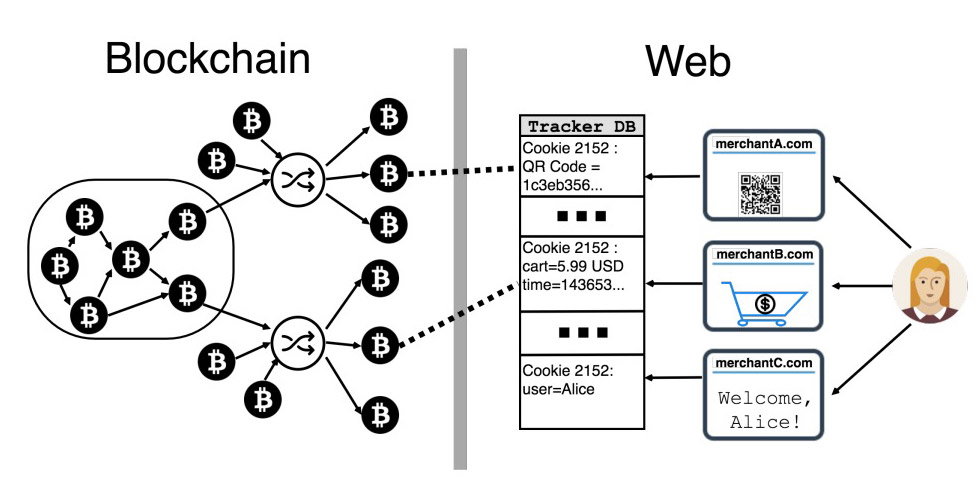
Forskare på Princeton University har upptäckt att det så kallade tredjeparts-trackers som åtefinns på många webbplatser kan användas för att ta reda på identiteten hos någon som betalar med bitcoin när de ehandlar.
Det handlar om så kallade cookies som tredjeparts-tjänster lägger till i användares webbplatser när dessa besöks. Dessa cookies kan tillsammans med information om hur bitcoin är uppbyggt länka samman flera bitcoin-transaktioner för att sedan eventuellt kunna koppla detta till identiteten på en användare.
Tidigare har bitcoin-användare kunnat förlita sig på tjänster som till exempel CoinJoin för att försöka skydda sin identitet när de handlar på nätet men enligt forskarna så går det trots det att i vissa fall kunna identifiera användarna. I sin forskningsrapport skriver man:
"We show that a small amount of additional information, namely that two (or more) transactions were made by the same entity, is sufficient to undo the effect of mixing. While such auxiliary information is available to many potential entities — merchants, other counterparties such as websites that accept donations, intermediaries such as payment processors, and potentially network eavesdroppers — web trackers are in the ideal position to carry out this attack."
Vidare skriver forskarna att det är svårt för bitcoin-användare att skydda sig från sådant här och deras rekommendation är att man helt enkelt byter till en annan krypto-valuta om man vill vara säker på att vara någorlunda anonym när man handlar på nätet:
"Unlike the Bitcoin approach of anonymity as an overlay, other cryptocurrencies bake privacy into the protocol, and promise untraceability of transactions.
The most well known of these are Zcash, based on the Zerocash protocol, and Monero, based on the Cryptonote protocol. Zcash is more computationally expensive but comes with more rigorous security properties. Of the two, Monero has more vendor support at the time of writing, but still far less than Bitcoin or even Litecoin, and primarily on hidden-service sites merchandising illicit goods. While some anonymity weaknesses have recently been revealed in Monero, we believe that it is not susceptible to the cluster intersection attack"